Berkeley has a substantial stock of housing built before 1978, the year the federal government banned lead-based paint for residential use. If your home was built before that year, lead-based paint may be present somewhere in its paint history.
This does not mean your home is dangerous. Lead paint that is intact and not being disturbed poses minimal immediate risk. The risk is in disturbing it without proper precautions during renovation, painting, or repair work.
This guide explains what Berkeley homeowners need to know before any painting or renovation project that involves older painted surfaces. I have held EPA Lead-Safe Renovation certification since 2002. Lead-safe work practices are standard operating procedure on every pre-1978 job we do.
The federal ban on lead-based paint in residential housing took effect in 1978. Homes built before that year may contain lead in any or all of their painted surfaces.
Risk levels by era:
- Built before 1940: High likelihood. Lead was commonly used in both interior and exterior paint. For Berkeley’s Victorian and Craftsman homes built between 1880 and 1930, lead paint is essentially universal somewhere in the paint history.
- Built 1940-1959: Moderate-high likelihood. Lead remained common in paint formulations through most of this period.
- Built 1960-1977: Lower but present likelihood. Lead use decreased significantly but was not eliminated until the federal ban.
- Built after 1978: No residential lead paint risk from original construction.
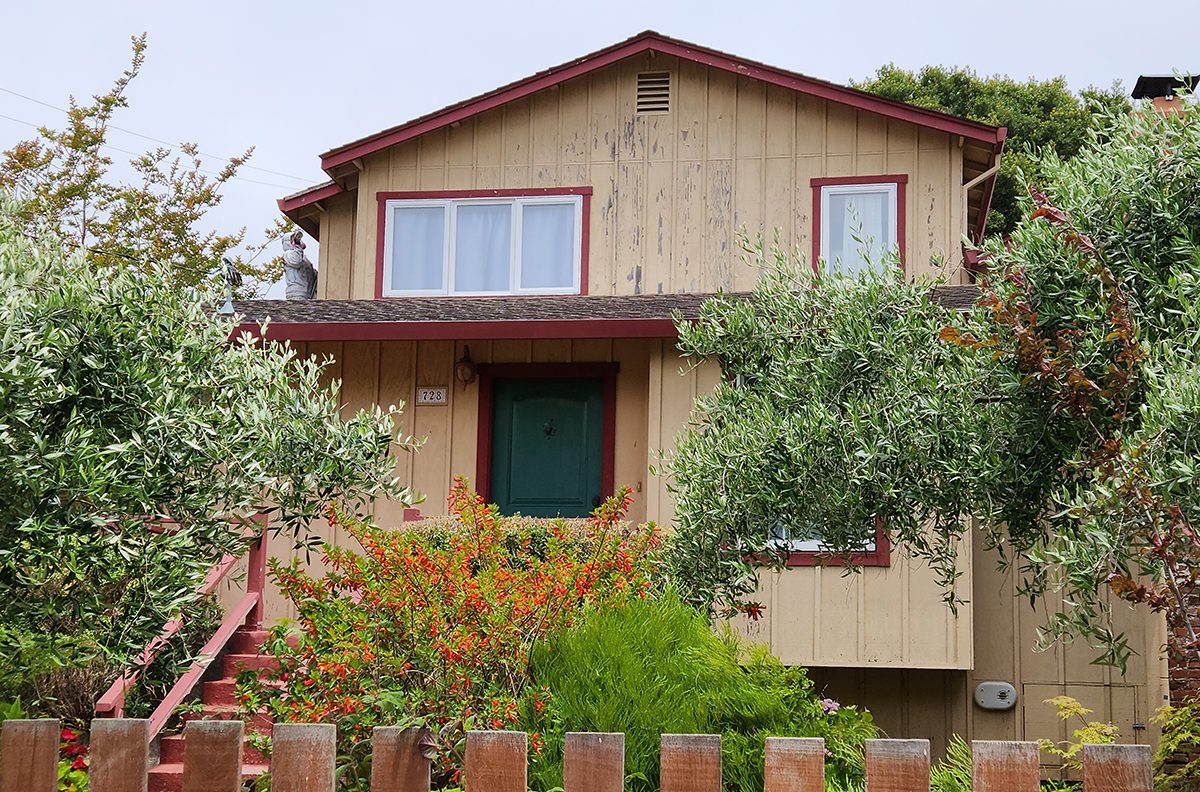
Berkeley’s housing stock is significantly older than the national average. The Elmwood, North Berkeley, West Berkeley, and South Berkeley neighborhoods have large proportions of housing built between 1880 and 1940. If you live in an older Berkeley neighborhood, assume lead paint may be present until testing indicates otherwise. When it’s time to paint or repair, choosing a Berkeley painting contractor with EPA RRP certification means the work will be handled correctly.
Lead paint is most commonly found on:
- Window frames and sills (where moisture-related deterioration is most common)
- Doors and door frames
- Exterior siding and trim
- Porches and porch floors
- Interior trim and baseboards in older homes
Lead is a neurotoxin. Exposure to lead dust is the primary health concern during painting and renovation work.
Key facts:
- Intact lead paint that is not deteriorating poses very low immediate risk
- Peeling, chipping, or deteriorating lead paint increases risk by generating chips and dust
- Renovation, painting, and repair activities that disturb lead paint create the highest risk periods
- Young children are at greater risk than adults because developing bodies absorb lead more readily
- The CDC has identified no safe level of blood lead for children
- Proper containment and cleanup during work dramatically reduces exposure
The EPA’s Renovation, Repair, and Painting Rule was designed specifically to address the risk during the renovation period, when dust is generated by sanding, scraping, and disturbing old painted surfaces.
The EPA’s Renovation, Repair, and Painting Rule (40 CFR Part 745) requires contractors working on pre-1978 housing to follow lead-safe work practices. This applies when:
- Work disturbs more than 6 square feet of painted surface in any room (interior)
- Any exterior project disturbing more than 20 square feet of painted surfaces
- Window replacement work, regardless of square footage
How to Verify EPA RRP Certification Before Hiring
Two certifications matter, and they are separate. Your contractor needs an individual Renovator certification and a firm-level EPA certification. Ask for both. The firm certification number can be verified through the EPA's online Contractor Search database.
A California C-33 contractor license does not cover EPA RRP requirements. A contractor can be fully licensed by the state and still not be EPA-certified for lead-safe work. Ask for the EPA firm certification number specifically.
The rule requires contractors to: 1. Be certified by the EPA as an individual Renovator, and have the firm EPA-certified as well 2. Provide homeowners with the EPA’s “Renovate Right” pamphlet before work begins 3. Use specific lead-safe work practices during the job: containment, prohibited methods, cleanup 4. Follow post-work cleanup and verification procedures 5. Retain records for three years
Prohibited methods under the RRP Rule: The rule bans practices that generate excessive lead dust: open-flame torches, heat guns above 1,100 degrees Fahrenheit, machine sanding or grinding without HEPA vacuum attachment, and uncontained work methods that allow dust to spread.
Penalties: EPA fines for RRP violations can reach $37,500 per day per violation. A contractor who is not certified and does not follow these practices is violating federal law in your home.
How to verify: Ask your contractor for their EPA Firm certification number. This is a separate certification from their California C-33 state contractor license. Both are worth verifying.
A&J Painting’s owner Alan Joyce has held EPA Lead-Safe Certification as an individual Renovator since 2002, before many current local contractors started working in the trade. Quality craftsmanship in this work starts with having the right certifications and following the right procedures.
When A&J works on a pre-1978 home, lead-safe practices are standard operating procedure. Here is what that looks like on an actual Berkeley job.
A&J Painting's Lead-Safe Certification History
Alan Joyce has held EPA Lead-Safe Renovation certification since 2002. That predates a significant portion of the contractors currently working in the East Bay. Lead-safe practices are not a recent addition to the workflow at A&J; they have been standard operating procedure on every pre-1978 job for more than two decades.
The difference in practice between a contractor certified since 2002 and one who completed a training course recently shows in how containment is set up, how cleanup is handled at the end of each day, and how the job is documented at completion. Certification age is worth asking about.
Containment setup: Before any scraping or sanding begins, plastic sheeting is placed on the ground around the exterior work area to catch paint chips and dust. For interior work, the area is sealed to prevent dust from spreading through the rest of the house.
Wet methods and HEPA equipment: Scraping and sanding are done using wet methods where practical, or with equipment fitted with HEPA filtration to capture dust at the source.
Prohibited tools: Open-flame torches, heat guns above 1,100 degrees, and unprotected power sanders are not used on lead-painted surfaces. These are the methods that generate the most lead dust.
Daily cleanup: At the end of each workday, plastic sheeting is carefully folded inward so chips and dust stay inside the fold, then bagged. Lead-containing waste is disposed of according to EPA requirements.
Post-work verification: After work is complete and before containment is removed, surfaces are checked for any remaining visible dust or chips.
This process takes more time than unprotected scraping and sanding. That time is the point. It is what keeps lead dust out of your home.
If you are unsure whether lead paint is present, testing is straightforward.
For Pre-1940 Berkeley Homes: Skip the Guesswork
In Berkeley's older neighborhoods (the Elmwood, North Berkeley, West Berkeley, South Berkeley), a significant portion of housing was built between 1880 and 1940. For these homes, lead paint is nearly universal somewhere in the paint history. Testing confirms what is almost certainly already true.
The practical approach: treat any pre-1940 Berkeley home as containing lead paint and proceed with lead-safe practices from the start. Reserve formal testing for situations where documentation is needed, such as insurance requirements, real estate transactions, or when young children are in the home.
DIY test kits: Available at hardware stores for $15 to $30. These provide a general yes/no result but have documented false negative rates with some paint formulations. Useful for general awareness, not for compliance documentation.
Professional testing options:
When testing matters most:
- Before a major renovation involving significant paint disturbance
- When you have young children and are planning painting or repair work
- When you need documentation for insurance or real estate purposes
A&J’s practical approach: For any pre-1940 Berkeley home, assume lead is present and proceed with lead-safe practices. For homes built between 1940 and 1978, testing is useful for peace of mind. A&J follows lead-safe protocols when working on any pre-1978 housing.
Before hiring any contractor to work on a pre-1978 Berkeley home:
A contractor who cannot answer these questions specifically either has not been trained in lead-safe work practices or does not follow them. A contractor who answers them with specifics is demonstrating the kind of competence worth paying for.
For exterior painting projects in Berkeley, these questions are especially relevant given the age of the housing stock in neighborhoods like the Elmwood and North Berkeley.
Not necessarily. Lead paint in good condition does not need to be removed before repainting. The standard approach is encapsulation: applying new paint over the existing lead paint using lead-safe work practices. The new paint layer seals the lead paint surface and prevents dust generation from normal wear. Lead paint removal (abatement) is typically required only when paint is severely deteriorated, peeling extensively, or when the surface is being physically replaced.
Yes, when done correctly. Encapsulation (painting over intact lead paint) is the EPA-approved standard approach for lead paint in sound condition. A&J follows EPA encapsulation standards on all pre-1978 home work.
Ask for their EPA Firm certification number. EPA RRP certified firms can be verified through the EPA’s online database. This is separate from their California C-33 contractor license.
The materials used are the same. The additional time for containment setup, cleanup, and disposal adds time to the job. A&J includes lead-safe practices in all pre-1978 home work. It is how the work is done, not a separate line item.
Testing is optional but can be informative. For most Berkeley homes built before 1960, lead paint is a reasonable working assumption. A&J will follow lead-safe protocols regardless. If you want formal documentation for insurance or real estate purposes, hire a certified inspector before work begins.
Lead paint in older Berkeley homes is a manageable issue, not a crisis. Intact lead paint that is not being disturbed is not an emergency. The risk is during disturbance, and lead-safe work practices exist specifically to manage that risk.
A contractor with genuine lead-safe training and a 24-year certification history approaches this differently than one who learned about RRP requirements recently. It shows in how the work is set up, how cleanup is handled, and how the job is documented.
If you have questions about lead paint in your Berkeley home or want to discuss an upcoming painting project, contact A&J Painting at (510) 292-3668.
Alan Joyce has been in the painting trade since 1988 and has operated A&J Painting Inc. in Berkeley since 1999. He holds C-33 License #759175 and has been EPA Lead-Safe Certified since 2002.
Looking for a painting contractor in Berkeley who is EPA RRP certified? Call (510) 292-3668 or visit the Berkeley painting page.