
If your painter told you one thing and your flooring installer told you the opposite, you’re not imagining the conflict, and neither of them is necessarily wrong. The order depends on what kind of flooring is going in. Hard-surface flooring like LVP, tile, and pre-finished or engineered hardwood goes in before the walls get painted. Carpet is the reverse: paint first, always. Site-finished hardwood that gets sanded and stained on location follows its own sequence entirely. And baseboards, no matter which flooring you choose, always get their final coat last. Alan Joyce has coordinated painters and flooring crews on East Bay renovations for 37 years, and this is the sequence that holds up on an actual job site, not just in theory.
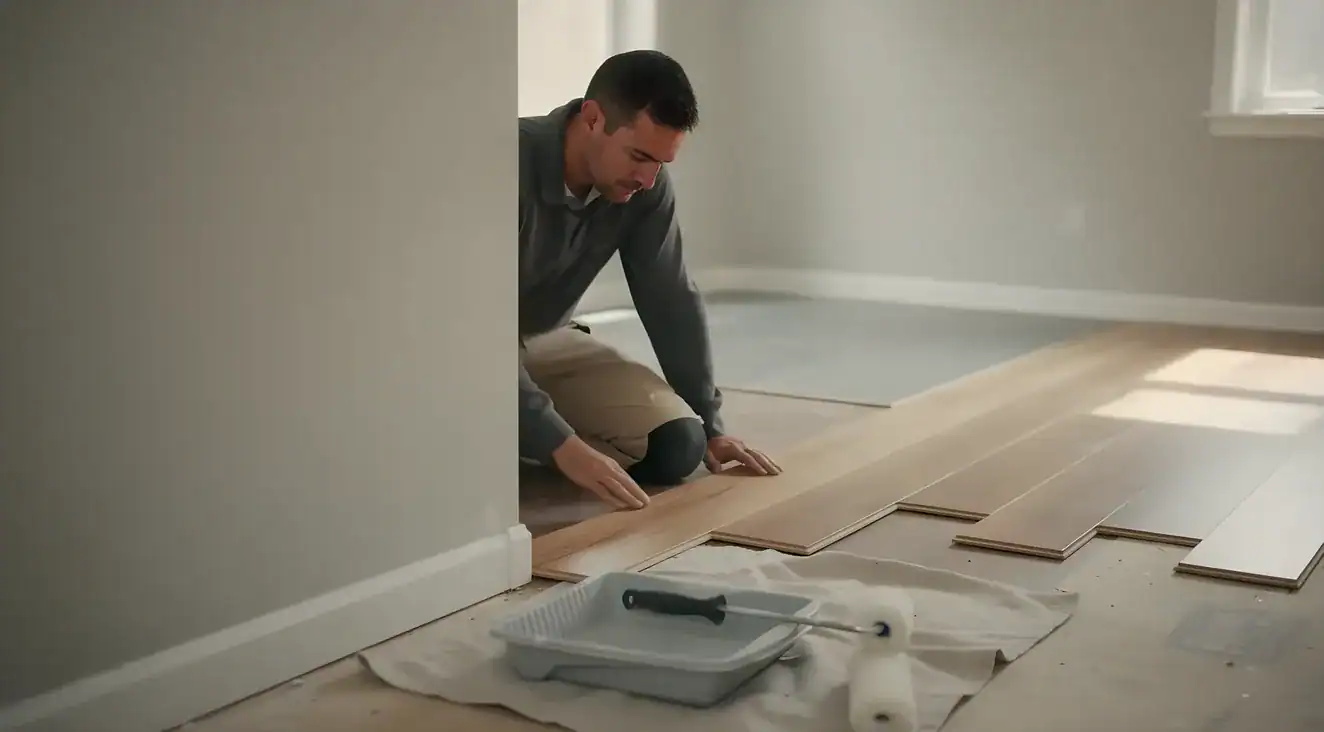
For most hard-surface flooring, like LVP, tile, and pre-finished or engineered hardwood, the flooring goes in first and the wall paint comes after, because a bare subfloor is far easier to protect than a finished floor. Once that flooring is down, the walls get painted and the trim gets touched up around it.
Carpet is the one flooring type where the order never changes: paint the walls and baseboards first, then install the carpet last. Paint that soaks into carpet fibers is essentially impossible to remove, so no experienced contractor argues for painting after carpet goes in.
Site-finished hardwood, the kind sanded and stained on location rather than arriving pre-finished, follows a third pattern. Paint the walls first, then the floor gets sanded, stained, and finished, then a cure-time buffer runs before trim work and furniture go back into the room.
Baseboards and trim are a separate decision from the walls around them, and this is the one rule that holds regardless of flooring type: baseboards always get their final coat last, after the flooring is installed.
The reasoning comes down to one asymmetry. Flooring installation is more physically destructive to walls and trim than painting is to a bare subfloor. Protecting a subfloor while painting is straightforward. Protecting a brand-new finished floor from a painter’s ladder and drop cloths takes far more care, and it isn’t always successful.
Ask your painter when they’d like to start, and they’ll often say after the floors are down, so they’re not working around brand-new flooring with ladders and drop cloths. Ask your flooring installer the same question, and they may prefer coming in after the paint is finished, so they’re not laying expensive material into a room full of dust, drips, and someone else’s foot traffic.
Why This Advice Is Different
Alan Joyce has spent 37 years standing in rooms where a painting crew and a flooring crew were both scheduled the same week. That's the difference between advice from a trade protecting its own convenience and an answer from someone who has actually coordinated both sides of the job.
Neither one is lying to you. Painters are optimizing for protecting fresh trim and freshly cured paint. Flooring installers are optimizing for protecting fresh material from someone else’s mess. Each is describing what makes their own piece of the job easier and safer for their own material. The problem is that a homeowner standing in the middle of a renovation, hearing two contradicting answers from two people they’re paying, has no easy way to tell which trade is giving practical advice and which is giving self-interested advice.
This exact conflict comes up on nearly every renovation Alan has worked. After 37 years in the painting trade, much of it spent showing up on jobs where a flooring crew was scheduled the same week, Alan reads the sequence the way someone who has actually coordinated both trades reads it, not the way either trade reads it on its own. He isn’t selling against flooring contractors when he explains the order. He’s explaining the physics of drying paint, curing grout, and a floor height that isn’t final until the floor is actually in place.
That’s the difference between advice from a trade defending its own convenience and an answer from someone who has stood in the room while both trades worked.
The short answer above covers the basic split, hard surfaces first and carpet last, but the reasoning shifts slightly by material. Here’s how it breaks down floor type by floor type.
Quick Take: Which Goes First?
Hard surfaces
LVP, tile, pre-finished hardwood: flooring goes in first, walls get painted after.
Carpet
Paint the walls and baseboards first. Carpet always goes in last, no exceptions.
Site-finished hardwood
Paint first, then sand, stain, and finish the floor, then wait for cure before anything moves back in.
| Floor Type | What Goes First | Why |
|---|---|---|
| Carpet | Paint the walls, then install carpet | Paint cannot be removed from carpet fibers once it soaks in |
| LVP (luxury vinyl plank) | Install flooring, then paint | Bare subfloor is easy to protect during painting; dried paint can be difficult to remove from some LVP finishes without risking scratches |
| Tile | Install and grout the tile, then paint | Tile installation is a wet, mechanically invasive trade; painting after avoids paint contact with fresh grout and lets the final baseboard and trim line be set against the actual tile height |
| Pre-finished / engineered hardwood | Install flooring, then paint | Same protectability logic as LVP; factory finish is durable but still worth protecting from paint drips |
| Site-finished hardwood (sanded and stained on-site) | Paint first, then sand, stain, and finish the floor, then wait for cure | Sanding dust and finish fumes would ruin fresh paint; the floor needs a cure-time buffer before furniture and trim go back |
| Baseboards and trim (any floor type) | Always finished last, after the floor is installed | The final cut line at the floor can only be set accurately once the finished floor height is known |
Save this table before scheduling either crew: a kitchen getting tile and a bedroom getting carpet in the same renovation need two different sequences, and mixing them up is the fastest way to end up with a redo.
Hard-surface flooring work involves cutting material on site, moving heavy boxes and planks through a finished room, and running tools that can gouge or scrape freshly painted walls and trim without much effort. A plank clipped into place near a wall, a tile saw running nearby, a hardwood board carried in at an angle: any of these can mark paint that just cured.
Protecting the room during that work is straightforward when the floor underneath is still a bare subfloor or old flooring on its way out. Rosin paper, canvas drop cloths, or a specialty floor-protection board go down, the flooring crew works on top of them, and nobody worries much about scuffing a surface that isn’t the finished product.
Flip the order, and the protection problem gets harder. Painting over a finished LVP or tile floor is possible, but protecting that floor from drips costs more setup time than protecting a bare subfloor, for no benefit beyond convenience.
Tile adds one more wrinkle. Thinset and grout need their own cure window, generally somewhere between 24 hours and about 7 days depending on the product, before they can handle heavy foot traffic or nearby trim work without damage. That’s one more reason painting waits until the tile crew has cleared out and the grout has had time to set.
Every credible source on this topic, painters and flooring installers alike, agrees on one point without argument: carpet goes in last, after the walls and baseboards are painted. There’s no version of this sequence where painting after carpet makes sense.
The reason is simple. Carpet is soft, absorbent, and effectively impossible to fully de-stain once paint has worked its way into the fibers. A dripped roller or a careless brush stroke near the wall line can leave a mark that cleaning doesn’t fully lift. A hard surface can usually have a paint drip wiped or scraped away. Carpet holds onto it.
A professional painter should still let the carpet installer know fresh paint is on the walls, so the installer uses appropriate caution around trim while stretching and trimming carpet along the edges of the room. That small heads-up avoids a scuffed baseboard on a floor that’s otherwise a straightforward, no-debate sequence.
Site-finished hardwood, floors sanded and stained right in your house rather than arriving with a factory finish already applied, is a different animal from the pre-finished or engineered hardwood in the table above, and mixing up the two is one of the more common sequencing mistakes homeowners make.
Dry Time Is Not Cure Time
Dry / walkable
The surface feels dry and can handle light foot traffic, often within a day for a water-based finish. It is not ready for furniture or trim work yet.
Fully cured
The finish has hardened all the way through, generally close to a week for water-based products and longer for oil-based. This is the point where furniture and trim can safely go back in.
The process runs in three phases. First, the existing floor gets sanded down to bare wood, which throws off heavy fine dust that settles on every surface in the room. Next, the wood gets stained, which needs its own dry time. Finally, a finish coat, usually a polyurethane or similar product, goes on and needs both dry time and a longer cure time before the floor can handle normal life again.
Paint goes first in this sequence for a practical reason: sanding dust would ruin fresh paint, and fumes from staining and finishing make the room an unpleasant place for a painter to work carefully. So walls get painted, then the floor is sanded, stained, and finished, then the room needs time before trim, furniture, and rugs move back in.
That cure-time buffer matters more than most homeowners expect. A water-based polyurethane finish typically reaches something like 75 percent of full cure after a day and around 90 percent after three days, with full cure landing near a week out. Oil-based finishes are usually walkable sooner but can take considerably longer to fully harden. Walkable is not the same as cured, and building in that buffer before trim touch-ups and furniture return is what keeps a brand-new floor from getting scuffed or dented before it has hardened all the way.
No matter which flooring type is going into a room, baseboards and trim follow the same rule: they always get their final finish coat last, after the flooring is installed. This is the one part of the sequence that doesn’t change based on carpet, tile, LVP, or hardwood, and it’s the detail most home-improvement content skips past without explaining why.
Why Baseboards Always Wait
New flooring rarely matches the exact thickness of whatever came out. Until the new floor is actually down, nobody knows the exact height where the baseboard needs to meet it. Paint and cut too early, and you risk a gap or an over-cut edge once the real floor height is set, which means redoing the trim.
The mechanism is simple once you see it: new flooring is frequently a different thickness than whatever was removed. Old carpet and pad might come out at a different height than the new LVP going in. A tile floor sits at a different level than the sheet vinyl it replaces. Until the new floor is actually down, nobody knows the exact height where the baseboard needs to meet it. Paint and cut a baseboard to match the old floor height, and you risk a visible gap once thinner flooring goes in, or an over-cut edge once thicker flooring goes in. Either way, that baseboard needs redone.
There’s a second, more practical reason baseboards wait: flooring installers frequently mar or scuff baseboards during their work, even on jobs where the baseboards aren’t being removed. A kick from a tile saw or a dropped plank can mark a baseboard finished too early, which means it needs touch-up regardless of the floor-height issue.
Alan’s crews handle this by priming baseboards ahead of time, since primer takes touch-up better than a finish coat does, and holding the actual finish coat until the floor is down and the cut line is final. That’s not extra caution for its own sake. It’s the difference between one clean finish coat and a redo that eats into everyone’s schedule.
As a side note, within the painting scope itself, the order still runs ceilings first, then walls, then trim and baseboards last, and that internal painting sequence holds true no matter where flooring falls in the larger renovation timeline.
Four mistakes account for most of the rework calls on a flooring-and-paint job:
It depends on the material going down. Hard surfaces such as LVP, tile, and pre-finished hardwood get installed first, with paint following. Carpet works in reverse, with paint going on before the carpet arrives. Baseboards sit outside this decision entirely: no matter which floor you choose, trim only gets its finish coat after that floor is in place.
LVP goes down first. Working over a bare subfloor gives a painter room to set up ladders and drop cloths without worrying about the finished surface, while a completed vinyl floor is much more exposed to drips and foot traffic during painting.
Paint comes first, no exceptions. Once paint works into carpet fibers, it’s close to impossible to lift back out, which is why this is the one flooring decision every experienced trade agrees on.
After the floor goes in. Since new flooring rarely matches the exact thickness of what was there before, the point where trim meets the floor can’t be finalized until the new material is down. Crews commonly prime the trim early and hold the finish coat for later.
Paint happens first when a floor is being sanded and stained in place. Dust from sanding and fumes from staining and finishing would compromise a fresh paint job, so the walls get done first, and the floor work follows, with a cure window built in before anything returns to the room.
Give it more time than it takes to become walkable. A water-based finish is generally safe to walk on within a day but can need close to a week to fully cure, and oil-based finishes, while walkable sooner, can take considerably longer to harden completely. Planning around that fuller cure window, rather than the walkable point, protects the new finish from early scuffs.
Getting this sequence right protects both trades’ work and saves everyone from redoing something that didn’t need redoing. A&J Painting has been coordinating with flooring contractors on East Bay renovations for decades, and that hands-on coordination, not a generic checklist, is what quality craftsmanship actually looks like on a multi-trade job.
For older Berkeley homes, floor protection during renovation work carries extra weight. A&J Painting holds a CSLB C-33 painting contractor license, and Alan is a certified Lead-Safe Renovator: lead-safe work practices call for taped-down floor protection whenever renovation work disturbs painted surfaces in a pre-1978 house, which describes a lot of the housing stock in this area.
A&J backs its interior work with a 3-year warranty, which is less about paperwork and more about a standard: get the sequence and the surface prep right the first time, so nobody’s calling us back for a redo. If you’re planning an interior painting project alongside new flooring, take a look at how we approach interior painting services from first coat to final baseboard touch-up.
Before either crew starts, it’s worth talking through the exact sequence for your project. Call Alan directly at (510) 292-3668.
Looking for a painting contractor in Berkeley who coordinates timing with your flooring crew? Call (510) 292-3668 or visit the contact page.